研究目的
Estimate the maximum range for underwater optical communication (UWOC) using PIN and avalanche photodetectors (APDs), focusing on transmitting high-quality video at 6Mbps speed across different water types.
研究成果
The study demonstrates significant improvements in UWOC range using wavelength adaptation and APDs, with maximum ranges of 520m in Pure Sea, 65m in Clear Ocean, and 44m in Coastal waters. Wavelength adaptation provides a 16 to 40dB SNR advantage over fixed-wavelength systems. The findings suggest practical recommendations for designing wavelength-adaptable UWOC systems.
研究不足
The study is simulation-based and assumes the current state of the art in commercially available components. Real-world conditions such as water turbidity variations, alignment issues, and environmental factors may affect the actual performance.
1:Experimental Design and Method Selection:
The study is simulation-based, modeling the UWOC channel to include attenuation and noise effects. It evaluates the performance of PIN and APD detectors in different water types (Pure Sea, Clear Ocean, Coastal waters) using various wavelengths (blue, blue-green, green).
2:Sample Selection and Data Sources:
The study uses theoretical models and parameters from literature to simulate the UWOC system's performance.
3:List of Experimental Equipment and Materials:
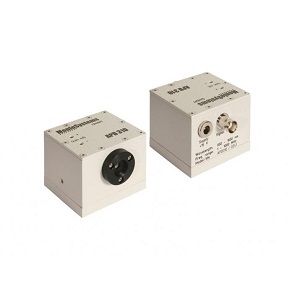
Includes a 100mW laser, PIN photodetector (FDS100), APD (APD210), and transimpedance amplifier (TIA60).
4:0).
Experimental Procedures and Operational Workflow:
4. Experimental Procedures and Operational Workflow: The simulation calculates the maximum communication range by evaluating SNR per bit for different water types and wavelengths, considering attenuation, noise, and modulation schemes (16-QAM).
5:Data Analysis Methods:
The analysis involves calculating SNR per bit and comparing with experimental results from literature to validate the simulation model.
独家科研数据包���,助您复现前沿成果��,加速创新突破
获取完整内容