研究目的
Investigating the development of plane-by-plane fiber Bragg gratings (FBGs) using a single pulse and a slit beam shaping technique to achieve enhanced optical properties.
研究成果
The slit beam shaping technique enables the inscription of high-quality plane-by-plane FBGs with uniform refractive index changes, lower transmission losses, and better reflectivity and FWHM compared to point-by-point FBGs. The method offers precise control over the grating's optical properties and demonstrates reduced polarization dependence.
研究不足
The energy efficiency decreases with the use of a slit, requiring higher pulse energies for smaller slit widths. The method's simplicity and control come at the cost of reduced efficiency compared to other beam shaping techniques.
1:Experimental Design and Method Selection:
The study employs a slit beam shaping technique to modify the focal volume of a femtosecond laser for inscribing FBGs. The relationship between the laser beam diameter and slit width is analytically modeled to achieve a circular cross-section.
2:Sample Selection and Data Sources:
FBGs are inscribed in the core of an SMF-28 fiber. The study uses a commercial femtosecond Fiber Laser Chirp Pulse Amplifier (FLCPA) operating at 1030 nm.
3:List of Experimental Equipment and Materials:
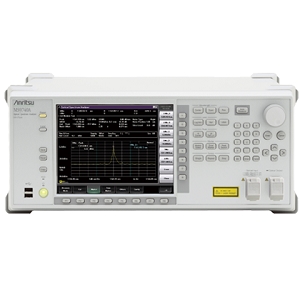
Includes a femtosecond laser, adjustable slit, objective lens, nanoresolution XYZ motor stage, and optical spectrum analyzer.
4:Experimental Procedures and Operational Workflow:
The laser pulses pass through an iris diaphragm and an adjustable slit before being focused onto the fiber core. The fiber is positioned on a slide with index-matching oil to avoid aberrations.
5:Data Analysis Methods:
The inscribed FBGs are characterized using quantitative phase microscopy (QPM) to analyze phase changes and width of modifications. Transmission and reflection spectra are measured to evaluate optical properties.
独家科研数据包�����,助您复现前沿成果,加速创新突破
获取完整内容