研究目的
To develop a high-sensitive all-optical graphene-oxide humidity sensor based on a side-polished symmetrical twin-core fiber Michelson interferometer for improved sensitivity and linearity in humidity measurement.
研究成果
The GO-SPTCFMI sensor achieves high humidity sensitivities of 2.72 nm/RH% and 3.76 dB/RH% with excellent linearity, overcoming limitations of single-core fiber sensors. It offers fast response and recovery times compared to previous works, making it suitable for applications in gas sensing and biochemical detection. Future work could focus on optimizing the GO film for faster response and integrating temperature compensation.
研究不足
The response and recovery times are relatively long (3.6 s and 6.4 s) due to the hydrophilic groups in GO restricting water molecule dynamics. The sensor's performance may be affected by temperature variations, as it shows a sensitivity of -0.4 nm/°C, requiring compensation in practical applications.
1:Experimental Design and Method Selection:
The sensor is designed as a Michelson interferometer using a side-polished twin-core fiber (SPTCF) coated with graphene oxide (GO). The interferometer is fabricated by splicing a TCF to a standard single-mode fiber (SMF) and tapering the splicing point to achieve a 50:50 splitting ratio. The side-polishing enhances the evanescent field for better interaction with the environment.
2:Sample Selection and Data Sources:
A symmetrical twin-core fiber with specific dimensions (cladding diameter 123 μm, core diameter
3:9 μm, core distance 64 μm) is used. GO solution is prepared using an improved Hummer's method and applied to the polished area. List of Experimental Equipment and Materials:
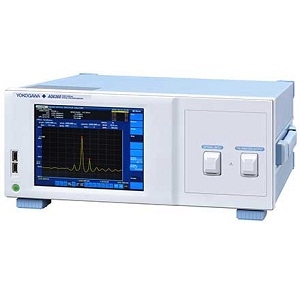
Equipment includes a super-continuum laser (YSL, SC-5), optical spectrum analyzer (OSA, YOKAGAWA, AQ6370C), fiber circulator, beam view analyzer (Newport, LBP2), and humidity-controlled chamber. Materials include TCF, SMF, GO solution.
4:Experimental Procedures and Operational Workflow:
The TCF is side-polished to a specific depth. The MI is assembled by splicing and tapering, with GO coating applied using multiple-drop-casting. Humidity measurements are conducted in a controlled chamber, and spectra are recorded using the OSA. Response time is tested using human breathing.
5:Data Analysis Methods:
Wavelength shifts and intensity changes are analyzed to determine humidity sensitivities. Linear regression is used for correlation coefficients.
独家科研数据包,助您复现前沿成果���,加速创新突破
获取完整内容