研究目的
To characterize a palladium-based fiber optic hydrogen sensor for health monitoring of transformers in electrical grids, focusing on its performance in gas and oil environments at various temperatures and hydrogen concentrations, and to investigate the influence of carbon monoxide.
研究成果
The palladium-based fiber optic hydrogen sensor demonstrates high sensitivity and accuracy for hydrogen detection in both gas and oil environments, making it suitable for online monitoring of transformers. The vacuum bagging manufacturing process ensures good reproducibility among sensors. Despite slow response times and sensitivity to CO, the sensor meets the requirements for transformer health monitoring, where gas generation rates are low and sampling intervals are long. Future work includes field installation in distribution transformers.
研究不足
The response time of the sensors is slow, especially in oil (up to several days), which may not be suitable for real-time applications. Accuracy is lower at very low hydrogen concentrations (<0.1% in gas and <100 ppm in oil) due to signal-to-noise ratio issues. The presence of carbon monoxide significantly slows the response but does not block it entirely. Temperature and pressure fluctuations in oil measurements increased noise. The study did not test in actual transformer conditions, only in laboratory setups.
1:Experimental Design and Method Selection:
The study involved manufacturing 15 sensors using a vacuum bagging process with a 100 μm Pd foil and a fiber Bragg grating (FBG). The sensors were tested in controlled gas and oil environments to measure hydrogen absorption-induced expansion via FBG wavelength shifts. Theoretical models for hydrogen concentration calculation in gas and oil were employed, and exponential decay fits were used for response time analysis.
2:Sample Selection and Data Sources:
Fifteen sensors were manufactured in one batch. Gas mixtures were prepared using calibrated cylinders with specific hydrogen concentrations. Dissolved hydrogen in oil was measured using a gas chromatograph (MYRKOS system).
3:List of Experimental Equipment and Materials:
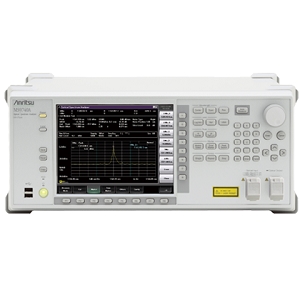
Equipment included optical spectrum analyzers (Anritsu MS9740A, Micron Optics si155), SLD source, pressure transducers (Honeywell PX2EN1XX050PAAAX, Thyracont VD85), thermocouples, Pt100 sensors, and a DGA system (MYRKOS). Materials included Pd foil, FBGs, adhesives, transformer mineral oil, and gas cylinders.
4:Experimental Procedures and Operational Workflow:
Sensors were tested in gas at temperatures from 60°C to 120°C and hydrogen concentrations from 0.01% to 5%, followed by testing in oil at 90°C with dissolved hydrogen from 5 to 2700 ppm. Gas mixtures were bubbled through oil, and oil samples were taken for external analysis. Response times and sensitivities were measured, and the influence of CO was investigated with additional sensors.
5:01% to 5%, followed by testing in oil at 90°C with dissolved hydrogen from 5 to 2700 ppm. Gas mixtures were bubbled through oil, and oil samples were taken for external analysis. Response times and sensitivities were measured, and the influence of CO was investigated with additional sensors.
Data Analysis Methods:
5. Data Analysis Methods: Data were analyzed using exponential decay fits for response times, theoretical equations for hydrogen concentration calculation, and statistical methods for accuracy and precision assessment. LabVIEW software was used for synchronization and recording.
独家科研数据包,助您复现前沿成果�����,加速创新突破
获取完整内容