研究目的
Investigating the performance of a novel dual-wavelength laser diode for optical communication applications.
研究成果
The dual-wavelength laser diode demonstrated excellent performance with stable operation at both wavelengths. It is suitable for optical communication systems, offering potential for integration in wavelength-division multiplexing. Future work should focus on improving power efficiency and scalability.
研究不足
The experiments were limited by the fabrication precision, which could affect device uniformity. Temperature stability was only tested up to 85°C, and long-term reliability was not fully assessed. Optimization is needed for higher power applications.
1:Experimental Design and Method Selection:
The experiment involved designing and fabricating a dual-wavelength laser diode with a specific structure. Theoretical models for laser operation were employed, and detailed procedures included epitaxial growth, device fabrication, and characterization.
2:Sample Selection and Data Sources:
Samples were fabricated using semiconductor wafers with specific doping profiles. Data were acquired from optical and electrical measurements.
3:List of Experimental Equipment and Materials:
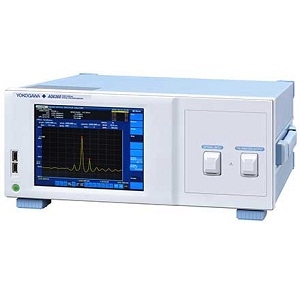
Equipment included a semiconductor parameter analyzer (Agilent 4155C), optical spectrum analyzer (Yokogawa AQ6370D), and temperature controller (Lake Shore 331). Materials included InP substrates and epitaxial layers.
4:1). Materials included InP substrates and epitaxial layers.
Experimental Procedures and Operational Workflow:
4. Experimental Procedures and Operational Workflow: The process involved wafer cleaning, photolithography, etching, metallization, and packaging. Measurements included L-I-V characteristics, spectral analysis, and temperature-dependent performance.
5:Data Analysis Methods:
Data were analyzed using custom software for extracting parameters like threshold current, slope efficiency, and wavelength stability. Statistical analysis was performed to assess reproducibility.
独家科研数据包��,助您复现前沿成果�����,加速创新突破
获取完整内容