研究目的
Investigating the dispersion-independent feature of a mode-locked erbium-doped fiber laser by incorporating a chirped fiber Bragg grating (CFBG) into the laser cavity.
研究成果
The study demonstrates a dispersion-independent mode-locked EDF laser with opposite large dispersion introduced into the laser cavity by a CFBG. The findings enrich the laser dynamics and provide a new idea for the design of new lasers.
研究不足
The study is limited by the nonlinearity of single-mode fiber in the cavity and the limited bandwidth of the CFBG, which may affect the generalizability of the findings to other laser designs.
1:Experimental Design and Method Selection:
The experiment involves incorporating a CFBG into a mode-locked erbium-doped fiber laser to study its dispersion-independent feature. The mode-locking is achieved based on equivalent saturable absorption of nonlinear polarization rotation effect.
2:Sample Selection and Data Sources:
The gain medium is a highly-doped EDF with a length of 1.1 m. The CFBG has a reflective spectrum bandwidth of 33 nm from 1535 to 1568 nm.
3:1 m. The CFBG has a reflective spectrum bandwidth of 33 nm from 1535 to 1568 nm.
List of Experimental Equipment and Materials:
3. List of Experimental Equipment and Materials: Includes a wavelength division multiplexer (WDM), a polarization-dependent isolator (PDI), two polarization controllers (PCs), a circulator, and a CFBG.
4:Experimental Procedures and Operational Workflow:
The experiment involves adjusting the PCs to optimize the polarization state of the laser cavity and measuring the output spectrum and pulse train with different pump powers.
5:Data Analysis Methods:
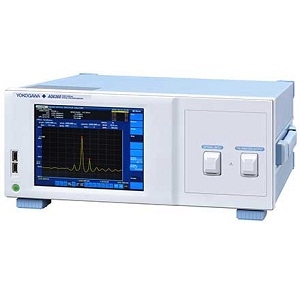
The output spectrum is observed by an optical spectrum instrument, and the time domain waveform is measured by an oscilloscope with an optoelectronic detection module.
独家科研数据包���,助您复现前沿成果���,加速创新突破
获取完整内容