研究目的
To solve the poor mechanical properties of Inconel 718 alloy laser-welded joints due to the presence of Laves phases and liquation cracks by high-frequency micro-vibration-coupled bead-on-plate laser welding.
研究成果
High-frequency micro-vibration-assisted bead-on-plate laser welding of Inconel 718 alloy can achieve grain refinement, reduce the formation of Laves phases, and inhibit the expansion of liquation cracks. The optimal vibration frequency was found to be 919 Hz, which can inhibit crack propagation.
研究不足
The study focuses on the effects of high-frequency micro-vibration on the microstructure and mechanical properties of Inconel 718 alloy welds, but the practical application of this technique in industrial settings may require further optimization and validation.
1:Experimental Design and Method Selection:
High-frequency micro-vibration-coupled bead-on-plate laser welding was used to study the effects on the microstructure, Laves phase formation, and liquation crack propagation of the Inconel 718 alloy weld.
2:Sample Selection and Data Sources:
An Inconel 718 nickel-based alloy rolled bar treated by solid solution was selected as the base material.
3:List of Experimental Equipment and Materials:
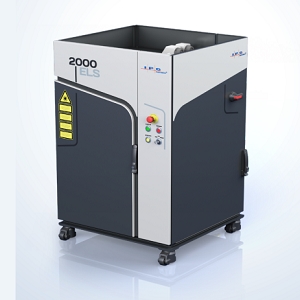
IPG-YLS-5000 YAG fiber laser, self-developed high-frequency vibration platform based on magnetostrictive materials, grinding machine, pure argon as shielding gas.
4:Experimental Procedures and Operational Workflow:
The test plate to be welded was firmly fixed on the vibration platform. The frequency of the vibration platform was searched by means of frequency sweeping. Bead-on-plate laser welding parameters included laser power of 4000 W, welding speed of
5:02 m/s, and defocusing amount of ?15 mm. Data Analysis Methods:
SEM and EDS were used for microstructure and composition analysis.
独家科研数据包�����,助您复现前沿成果�,加速创新突破
获取完整内容