研究目的
To investigate the effect of various post-weld treatments on the high cycle fatigue (HCF) performance of laser-welded Ti-6Al-4V butt joints and to provide practical guidelines for mitigating the notch effect from defects.
研究成果
The study demonstrated that machining and LSR significantly improve the fatigue performance of laser-welded Ti-6Al-4V butt joints by shifting the crack initiation from surface to interior. LSP was found to have a positive impact on the fatigue life, especially for surface defects, but with a slightly larger fatigue scatter band. The fatigue properties were unaffected by the LBW process parameters despite differences in porosity levels.
研究不足
The study focuses on Ti-6Al-4V titanium alloy and may not be directly applicable to other materials. The effectiveness of LSP for fatigue life extension is more pronounced for surface defects than for internal defects such as porosity.
1:Experimental Design and Method Selection:
The study employed laser beam welding (LBW) on Ti-6Al-4V titanium alloy sheets, followed by various post-weld treatments including laser surface remelting (LSR) and laser shock peening (LSP).
2:Sample Selection and Data Sources:
Hot-rolled and annealed Ti-6Al-4V sheets with a thickness of
3:6 mm were used. List of Experimental Equipment and Materials:
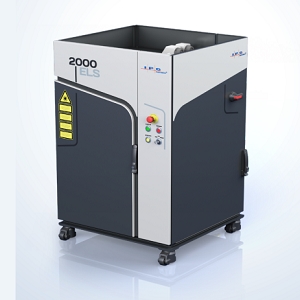
An 8kW continuous-wave ytterbium fibre laser YLS-8000 (IPG Photonics) for LBW and LSR, a Testronic 100kN RUMUL resonant testing machine for fatigue tests, and a Q-switched Nd:YAG laser for LSP.
4:Experimental Procedures and Operational Workflow:
LBW was performed in argon atmosphere, followed by LSR or LSP treatments. Fatigue tests were conducted at a frequency of around 80 Hz with an applied load ratio R =
5:Data Analysis Methods:
The effect of post-weld treatments on fatigue performance was analyzed, and the influence of process parameters on porosity level was quantitatively characterized.
独家科研数据包���,助您复现前沿成果�,加速创新突破
获取完整内容