研究目的
To analyze and understand the moisture-induced degradation of thin-film photovoltaic modules to enhance their reliability.
研究成果
The power degradation of CIGS module under the damp-heat environment is more affected by the enhanced recombination of the absorber layer than the degradation of the metal layer or the leakage over layers. The study contributes to understanding and improving the reliability of glass-to-glass thin-film technologies under hot and humid environments.
研究不足
The study focuses on glass-to-glass CIGS modules under damp-heat conditions, and the findings may not be directly applicable to other module types or environmental conditions.
1:Experimental Design and Method Selection:
The study involves fabricating and testing CIGS modules under damp-heat conditions with periodical measurement of electrical characteristics. A modified method to extract diode model parameters from degraded I–V curves is proposed.
2:Sample Selection and Data Sources:
Glass-to-glass CIGS mini-modules were fabricated and tested under various damp-heat conditions.
3:List of Experimental Equipment and Materials:
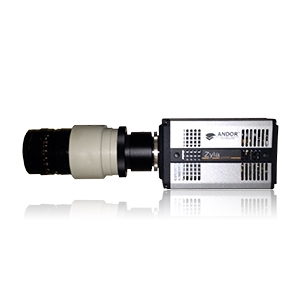
I–V tester (K3000 model by McScience with K201 solar simulator), electroluminescence (EL) inspection system (Zyla sCMOS by ANDOR).
4:Experimental Procedures and Operational Workflow:
Modules were stored in environmental chambers under four test conditions with periodic electrical characterization under standard test conditions.
5:Data Analysis Methods:
A modified method to extract diode model parameters from degraded I–V curves was applied, and degradation rates were modeled.
独家科研数据包��,助您复现前沿成果����,加速创新突破
获取完整内容