研究目的
To investigate the effect of various gate widths on the accuracy of estimation of FRET parameters with focus on the near-infrared spectral window.
研究成果
The study demonstrated that increasing the gate width up to 1000 ps allows for accurate quantification of FRET interactions in the near-infrared spectral window, with a three-fold decrease in acquisition time. This improvement in sensitivity and reduction in imaging protocol acquisition times could benefit in vivo NIR FRET imaging.
研究不足
The study focused on the near-infrared spectral window and specific FRET pairs. The effect of gate width on other spectral windows or FRET pairs was not investigated. Additionally, the study did not explore the impact of gate width on tomographic imaging resolution.
1:Experimental Design and Method Selection:
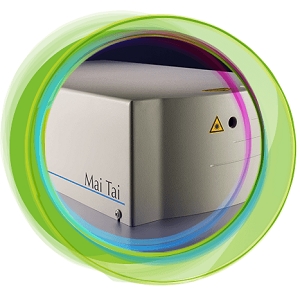
The study employed a time-resolved optical tomography system to investigate the effect of gate width on FRET parameter estimation. The system used a Ti-Sapphire MaiTai HP laser for excitation and a gated intensified charge coupled device (ICCD) camera for fluorescence image collection.
2:Sample Selection and Data Sources:
Experiments were performed in silico, in vitro, and in vivo. In silico simulations were conducted to simulate different Acceptor-to-Donor (A:D) ratios and fluorescence lifetimes. In vitro experiments used AlexaFluor 700 and AlexaFluor 750 conjugated to mouse immunoglobin G (IgG). In vivo experiments involved a murine tumor model.
3:List of Experimental Equipment and Materials:
Ti-Sapphire MaiTai HP laser, gated ICCD camera (PicoStar HR, LaVision GmbH), AlexaFluor 700 and AlexaFluor 750 dyes, mouse immunoglobin G (IgG), T47D breast cancer cells.
4:Experimental Procedures and Operational Workflow:
The gate width of the ICCD was increased from 300 ps to 1000 ps in 100 ps intervals. For in vitro and in vivo studies, specific filters were used to filter the light detected at the ICCD. Data were collected and analyzed using bi-exponential fitting algorithms.
5:Data Analysis Methods:
A least-squares method was used to fit the time point spread functions (TPSFs) to a bi-exponential model to retrieve the FRET donor fraction and the quenched lifetime.
独家科研数据包���,助您复现前沿成果,加速创新突破
获取完整内容