研究目的
To analyze the fracture mechanism at cryogenic temperatures of thick 316LN laser welded joints.
研究成果
The weld microstructure was composed of single austenite and was characterized by cellular and columnar grains. The Rm values of the laser welded joints were almost equal to that of the base metal both at RT and 4.2 K. The fracture toughness of the weldments decreased to ?84% of that of the parent metal at 4.2 K. The enhanced toughness of BM was attributed primarily to the formation of twinning and fine grain size, while the partially stress-induced phase transformation of the austenite led to an adverse effect on the fracture toughness.
研究不足
The study focuses on the fracture mechanism at cryogenic temperatures of thick 316LN laser welded joints, and the impact of the particles on the fracture toughness value was not examined during the present study.
1:Experimental Design and Method Selection:
Laser welding of modified 316LN steel with a thickness of 20 mm was conducted using a YLS-20000 fiber laser. The microstructure of the weld joint was characterized and tensile and fracture toughness tests were carried out.
2:Sample Selection and Data Sources:
Hot-rolled 316LN austenitic stainless steel plate manufactured by TISCO according to the higher ITER requirements was used as parent material for the tests.
3:List of Experimental Equipment and Materials:
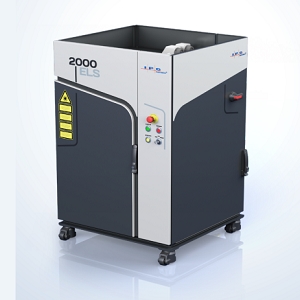
An IPG YLS-20000 fiber laser was used for the laser welding. The tensile tests were performed by using an electronic universal test machine (Model MTS SANS CMT 5000).
4:0).
Experimental Procedures and Operational Workflow:
4. Experimental Procedures and Operational Workflow: The microstructure evolution of the fracture specimens was studied systematically to elucidate the fracture mechanism. The weld was composed of the single austenite phase and was characterized by cellular and columnar grains.
5:Data Analysis Methods:
The fracture toughness of the weldments was analyzed and compared to that of the parent metal at 4.2 K.
独家科研数据包�,助您复现前沿成果,加速创新突破
获取完整内容