研究目的
Investigating the fabrication of high-density and flexible photodetector arrays via size-matched heterogeneous micro-/nanostructure printing for superior photoelectric response.
研究成果
The study successfully demonstrates a template-assisted sequential printing strategy for fabricating high-density, flexible photodetector arrays with size-matched lateral semiconductor/metal heterostructures. These arrays exhibit high photoelectric performance, including a detectivity of 3.41 × 10¹² Jones and responsivity of 12.9 A W?1 under bending conditions. The method allows for high-density integration (106 pixels cm?2) and resolution (2.5 × 103 dpi), showcasing potential applications in artificial vision systems and intelligent devices.
研究不足
The study focuses on the fabrication and performance of photodetector arrays using a specific printing strategy and materials. Limitations may include the scalability of the printing process, the durability of flexible substrates under repeated bending, and the generalizability of the method to other semiconductor/metal combinations.
1:Experimental Design and Method Selection:
The study employs a template-assisted sequential printing strategy to fabricate photodetector arrays with lateral semiconductor/metal heterostructures. The methodology involves the use of organic semiconductors (PBDB-T:ITIC blend) and metal nanoparticles (Ag) as functional inks, manipulated through a three-phase contact line (TCL) in sequential two-step printing processes.
2:Sample Selection and Data Sources:
The samples include printed photodetector arrays on both rigid (silicon wafer) and flexible substrates (polyethylene terephthalate, PET, film). Data sources include optical microscopy, scanning electron microscopy (SEM), and time-resolved photoluminescence (TRPL) measurements.
3:List of Experimental Equipment and Materials:
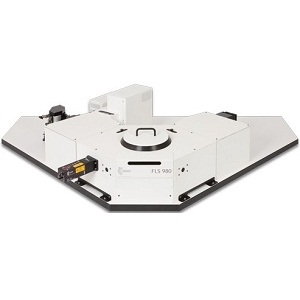
Equipment includes an optical microscope (Nikon LV100ND), SEM (JEOL, JSM-7500F), and a steady state and lifetime spectrometer (FLS980, Edinburgh Instruments Ltd.). Materials include Ag nanoparticles, PBDB-T, and ITIC.
4:Experimental Procedures and Operational Workflow:
The process involves printing PBDB-T:ITIC blend onto a substrate using a microwall-structured template, followed by overprinting Ag electrode microwire array with template rotation. The procedure is detailed for achieving high-resolution structures and flexibility.
5:Data Analysis Methods:
Performance of the photodetector is evaluated through current-voltage measurements, dynamic photoresponse properties, and uniformity tests across multiple pixels.
独家科研数据包,助您复现前沿成果�����,加速创新突破
获取完整内容